
Charles K.
Simply Delighted by SimpleLabs
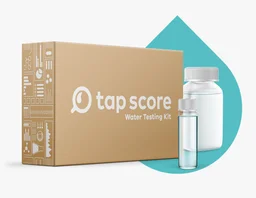
What a delightful experience so far with SimpleLab. The bottom line up front is that I have found SimpleLab's mail-order water test process to be both simple, quick and responsive. After reviewing some example reports for other customers, I found the reports to be clean, comprehensive, and easy to understand. More importantly, I had a specific question about how to handle a particular situation and I am grateful to Robin at SimpleLabs for prompt responses and being willing to research my specific issue. So, while I have not yet received my report, and while it will be some time before I submit my “After” test sample to SimpleLabs to compare it to my initial “Before” results, I am very pleased with the experience so far. Now, if you’re bored and would like to have some more detail on this, here goes: 1. My saga starts about 6 months ago when I replaced my venerable, but quite unfriendly, 1989 Weil-McLain cast-iron kerosene boiler with a Rinnai Tankless Combi-Boiler running on propane. 2. In my research prior to the replacement, I learned that the thin fins of the tankless boiler’s heat exchanger are very sensitive to scale buildup and that my water “hardness” (i.e., concentration of Ca2+ and Mg2+) was something I would have to get a handle on. This was particularly true given that I live in a rural area and use a well. I had done a water test 10 years earlier but have long since lost those records and only have vague memories what they showed. So when my vendor for the tankless boiler sent me one of those follow-up auto-emails saying that they carried “water softening” solutions that fixed hard water and that they would do a “free water test”, I scheduled an appointment. 3. Hmmm……the “test” was more or less along the lines of a coloring exercise. The vendor’s water analyst dipped some strips into the water, did a eye-dropper test of some sort, and basically said “Red is bad, water softener needed, cost is $6500 (or $1-$2k more for premium add-ons), and install next week.” Now, I have impaired color vision (something called Red-Green deficiency) so I couldn’t tell whether the strips or drops were red or blue or something else, but I seemed to remember that there were numbers involved in testing for impurities in the water. So, I told him I would get back to him. 4. I then did some research and learned: a. This “water softening” thing is one solution to the water “hardness” piece, of the water purity problem. It appears softening is an effective solution, but there are simpler, less burdensome (e.g., no salt maintenance, no reverse osmosis for Na and Cl ions, no special sink faucets, etc.) and far cheaper solutions (like 90%+ cheaper) such as scale inhibitors (polyphosphate, electric/magnetic, etc.) for addressing some water hardness situations. b. The water softening may not do anything at all for iron, lead, volatile organic compounds (think pesticides), bacteria or viruses, and for city folks, chlorine/chloramine. I think catching these is what the add-ons are for. c. I found SimpleLabs and their approach to water testing is all about those numbers I seemed to remember. Good news! 5. Finally, my specific question was: if I use a scale inhibitor that changes the crystalline structure of the Ca2+ and Mg2+ going through my water system so that these ions DO NOT STICK TO THE PIPES (i.e., no scale is created), but the Ca2+ and Mg2+ ARE NOT ACTUALLY REMOVED from the water like a water softener does (they just pass harmlessly through the system), does the Tap Score reflect this in some way so I can quantitatively measure the degree of scale inhibition? Unfortunately, the answer appears to be “No”. But I thought I’d ask. 😊